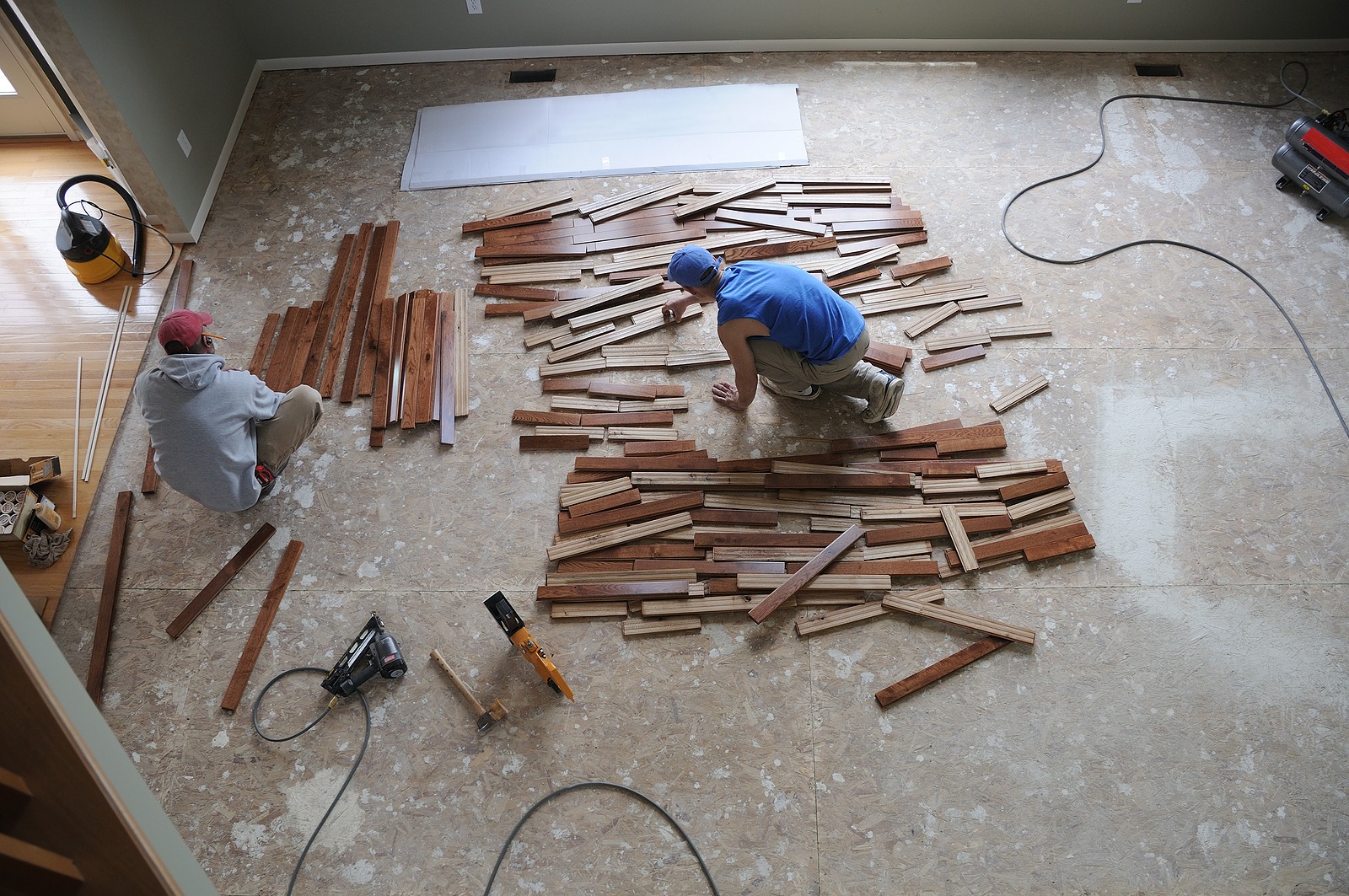
When your artisan contractor clients show they can identify, control, and document job hazards, they protect their crews and improve their insurance profile.
A small flooring crew shows up to a commercial renovation job before dawn. The site looks clear, but within the first hour, a worker slips on leftover adhesive. By lunch, another tweaks a shoulder lifting heavy tile boxes. Neither injury is catastrophic, but both go on record. Unbeknownst to your clients, over time, incidents like these quietly build a claims history that drives premiums higher and limits future coverage options.
That’s where a job hazard analysis (JHA) comes in. While your clients might roll their eyes at the paperwork, it’s a proactive, repeatable way to break down each job, identify where things could go wrong, and set controls before the first tool is powered on. For agents and brokers, helping artisan clients make JHAs part of their routine is a must.
What Are Artisan Contractors Up Against?
Many artisan contractors may assume risk is lower because they aren’t on scaffolds 30 feet high or working next to large excavators. But the reality is different:
- Tasks are often repetitive (kneeling, lifting, shaping materials) and can lead to cumulative injuries.
- Materials and tools vary widely. Dust, adhesives, sharp edges, heavy slabs, and powered tools all present hazards.
- New job conditions, changing sites, and subcontractor crews make consistency a challenge.
- Since every artisan job is somewhat unique, standardized safety protocols may be less effective.
From an insurance perspective, frequent minor incidents, near-misses, or “almost happened” events can degrade the loss history over time, affecting premiums, coverage eligibility, and the ability to negotiate favorable terms.
How to Conduct a Job Hazard Analysis
Here’s how your artisan-contractor clients (and you as their advisor) can break down the JHA process into manageable steps, while tying it to insurance benefits.
1. Select & Prioritize the Jobs
As a first step widely recommended by safety agencies, begin by choosing the jobs or tasks to analyze. Focus first on tasks that:
- Have a high injury or near-miss history.
- Present a potential for severe injury (even if rare).
- Involve new equipment, materials, or methods.
2. Break the Job Into Steps
Detail each task in sequence. For example, a flooring contractor might break down “tile installation” into steps like: setting the thin-set, placing tile, grouting, and cleanup. Each step becomes a row for analysis.
3. Identify Hazards at Each Step
This is where looking at the worst-case scenario can actually pay off. For each step, ask: What could go wrong? Who could be hurt? Consider hazards from physical (lifting, strain), chemical (adhesives, dust), ergonomic (kneeling, awkward posture), or environmental (confined spaces, poor lighting) perspectives.
4. Develop Controls
Once hazards are identified, determine how to control them using the Hierarchy of Controls: a five-step safety model that ranks risk-reduction methods from most to least effective:
- Eliminate the hazard
- Substitute a safer alternative
- Apply engineering controls
- Apply administrative controls
- Use PPE as the final safeguard
For example, a flooring crew might switch to low-VOC adhesives (substitution), use wet-cutting systems (engineering), rotate crews (administrative), and wear respirators and knee pads (PPE).
5. Review and Update
A JHA report is not “set it and forget it.” Whenever materials change, crews change, or near-misses occur, revisit the JHA for that task. Continuously improved JHAs help demonstrate to insurers that the contractor is committed to safety and risk control.
Why JHA Matters for Insurance and Claims
When artisan contractors engage in formal hazard-analysis processes, they improve safety and their insurable profile. Insurance companies and underwriting teams often look at:
- Loss history: fewer claims result in better renewal terms
- Safety programs: documented practices show discipline and lower risk
- Changes & controls: evidence that the contractor reviews and mitigates hazards
For you as an agent, promoting the use of JHA to your clients may help them qualify for better rates and more flexible policy terms. Clients who consistently use JHAs will often see fewer claims, reduced financial exposure, and stronger conditions at policy renewal.
Checklist: Key Elements of a Job Hazard Analysis
Encourage your artisan contractor clients to adopt the following:
- Select high-risk tasks for analysis (new methods, heavy lifting, unusual materials).
- Break each job into defined steps.
- For each step, identify hazards (physical, chemical, ergonomics, environmental).
- Apply controls via hierarchy: eliminate, engineer, train, PPE.
- Help buy-in by engaging their crew. Review and capture their feedback.
- Review the JHA whenever conditions change (new crew, new materials, near-miss).
- Document the JHA process. Insurers love those types of paper trails, photos, and videos.
Get Specialized Artisan Contractor Insurance
As you guide your artisan contractor clients through JHAs and risk-control improvements, you’ll want a carrier partner that recognizes and rewards those efforts. MiniCo is that partner. With its exclusive Artisan Contractor Insurance Program for niche trades, MiniCo offers coverage designed for contractors who take risk management and safety seriously.
Agents working with flooring, tile, drywall, painting, landscaping, and other artisan contractor classes have access to MiniCo’s exclusive markets that understand class-specific exposures and value documented safety programs to include JHAs. MiniCo’s program underwriters help your clients show they’re more than just “another small contractor.” They’re proactive, safety-minded, and ready for coverage that aligns with their risk profile.
NOTE: MiniCo’s exclusive Artisan Contractor program is available in Arizona, California, and Nevada. Contact MiniCo for updated availability.
FAQ: Common Agent/Client Questions
How often does a contractor need to conduct a JHA?
Whenever there is a significant change, like adopting new materials, tools, methods, or if a near-miss or incident occurs. Good practice is an annual review at minimum.
Will insurers ask to see JHAs?
Many specialty markets and underwriting teams will ask about documented safety practices, including JHAs, when evaluating renewal or new business. Having JHAs in place strengthens the submission.
Does a JHA replace regular safety training?
No. A JHA complements safety training. It identifies hazards so training and controls can be targeted and effective.
Does JHA only apply to large jobs?
Not at all. Even smaller artisan jobs benefit. The focus is on tasks with risk, like heavy lifting, chemical exposure, or new tools and processes. It’s about the quality of the analysis, not job size.
MiniCo: The Next Step Toward Safer Worksites and Stronger Coverage
A stronger safety culture means fewer claims, and when you pair that with MiniCo’s specialized coverage for artisan trades, that’s the ultimate in risk management. Contact MiniCo’s team today to learn how your artisan clients can benefit from enhanced coverage aligned with their proactive safety practices.
NOTE: MiniCo’s exclusive Artisan Contractor program is available in Arizona, California, and Nevada. Contact MiniCo for updated availability.